



11 Sep What Makes Texas-Style BBQ Different — And Why It Hits in San Diego
Texas-style BBQ comes down to a few stubborn rules: beef over pork as the centerpiece, a simple salt-and-pepper rub, post oak smoke, and time measured in half-days, not minutes. Smokey & The Brisket, a wood-fired BBQ restaurant at 5465 Lake Murray Blvd in La Mesa, builds its menu on those rules, which is why its brisket tastes nothing like the mesquite-grilled stuff that dominates most of the city. If you want to understand the difference and where to find real Texas BBQ San Diego can be proud of, here’s the breakdown.
Beef Is the Star, Not the Sidekick
Carolina BBQ revolves around pork. Texas revolves around beef, and brisket is the headliner. Central Texas, widely considered the birthplace of the style, grew out of old German and Czech meat markets that smoked beef cuts and sold them by the pound on butcher paper. That heritage is why a Texas plate leads with brisket, beef ribs, and burnt ends instead of pulled pork.
Smokey & The Brisket follows that order. The prime brisket is the anchor, with pork spare ribs and burnt ends backing it up. You can still get great pulled pork here, but in the Texas tradition, beef sets the standard.
The Rub Stays Out of the Way
Walk into a Central Texas joint and the seasoning is almost insultingly simple: coarse salt and black pepper, sometimes nothing else. The point is to taste the beef and the smoke, not a wall of spices or a flood of sauce. Sauce, when it shows up, sits on the side as an option rather than a disguise.
That restraint takes confidence. You can only serve naked salt-and-pepper brisket if the meat and the smoke are good enough to carry it, which is the whole test of a real pitmaster. A heavy sauce or a dozen spices can hide a mediocre cook. Salt, pepper, and smoke hide nothing, so the brisket has to be right on its own.
Post Oak and a 12-Hour Clock
Wood matters. Central Texas pitmasters favor post oak because it burns clean and gives brisket a gentle smoke without overpowering the beef. Just as important is the clock. Texas brisket is cooked low and slow, typically between 225°F and 275°F, for 12 to 18 hours depending on the cut.
There’s hard science under that patience. The USDA says beef is safe to eat at 145°F, but safe and tender are not the same thing. A brisket is loaded with tough connective tissue, and as ThermoWorks explains, that collagen doesn’t fully melt into silky gelatin until the meat pushes up into the 195°F to 205°F range. Hit that window slowly and the brisket turns tender and juicy. Rush it and you get a safe-but-chewy slab. Smokey & The Brisket’s pit boss works the smoker through the night to land in that window, every day.
Why the Smoke Ring and Bark Matter
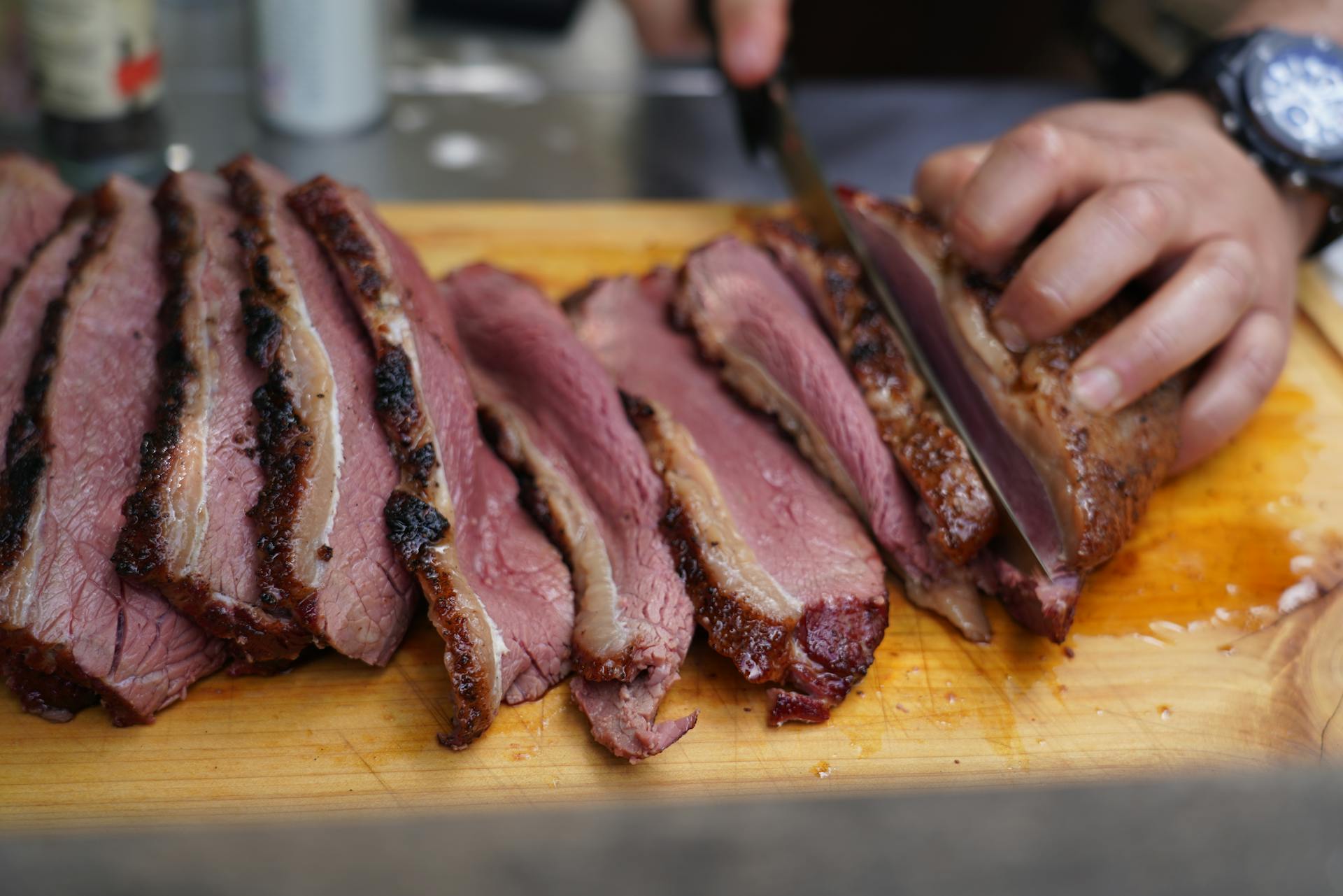
Two things separate a true smoked brisket La Mesa diners brag about from an oven roast. The bark is the dark, peppery crust that forms over hours of smoke. The smoke ring is the pink layer just under the surface, a sign the meat actually spent real time over wood. A researcher at UT Dallas even broke down the chemistry of the smoke ring for WFAA, confirming it’s a chemical reaction from smoke, not a gimmick. When you slice into Smokey & The Brisket’s brisket, both are there.
Why It Hits Differently in San Diego
San Diego is a grilling town, and most local “BBQ” is fast, hot, and mesquite-driven. Real Texas-style smoking is the opposite philosophy, and that contrast is exactly why it lands so hard here. There’s almost no competition doing authentic 12-hour beef in the eastern suburbs, which is part of why locals rank it among the best BBQ in La Mesa. The brand’s whole story, told on the about page, is built around doing it the slow, old-fashioned way.
There’s also a cultural fit worth naming. San Diego is full of transplants, and plenty of them carry strong opinions about what brisket should taste like back home in Texas. A place that smokes beef the right way gives those folks a reason to stop searching, and it gives everyone else a taste of the real thing without a flight to Austin. That’s a rare draw in a market crowded with tri-tip and mesquite chains.
Want to taste the difference for yourself? See the full menu and plan your visit.
Beyond Brisket: The Texas Plate
Texas-style BBQ is bigger than one cut. The same smoker turns out beef ribs, burnt ends, and items with a Lone Star streak like the Big Tex Meatloaf, which we cover in our piece on San Diego’s best-kept BBQ secret. Even the smoked chicken gets the low-and-slow treatment. It’s a full table built on the same wood-fired discipline.
The sides carry the tradition too. Classic Texas plates lean on simple, hearty partners like beans, potato salad, and slaw, served to complement the meat rather than compete with it. Pile a few onto a plate next to sliced brisket and a couple of ribs, and you’ve got the same meal you’d find at a roadside joint outside Austin, just a lot closer to home.
Frequently Asked Questions
What makes Texas BBQ different from other styles?
Texas BBQ centers on beef, especially brisket, uses a simple salt-and-pepper rub, smokes over post oak, and cooks low and slow for 12 to 18 hours. Other regions lean on pork and heavier sauces.
How long does it take to smoke a brisket?
A full brisket typically smokes 12 to 18 hours at 225°F to 275°F. The meat needs to reach roughly 195°F to 205°F internally for the collagen to render into tender, juicy gelatin.
Where can I get Texas-style brisket in San Diego?
Smokey & The Brisket in La Mesa smokes prime brisket 12-plus hours daily, serving authentic Texas-style BBQ in the eastern San Diego suburbs.
Do you cater Texas-style BBQ?
Yes. The same smoked brisket, ribs, and sides are available for catered events through our catering service.
Ready to Get Started?
Taste what 12 hours of post-oak smoke actually does to a brisket. Pull up a chair and find out why Texas-style hits different in La Mesa.
Plan your visit or call us at 619-439-6544.
Sorry, the comment form is closed at this time.